Where the Network Ends, Small AI Begins: Tiny Models Are Saving Lives Offline
IEEE Spectrum reports how phone-sized AI models authenticate medicines, spot crop disease, and run ECGs in places with no broadband and no data centers.
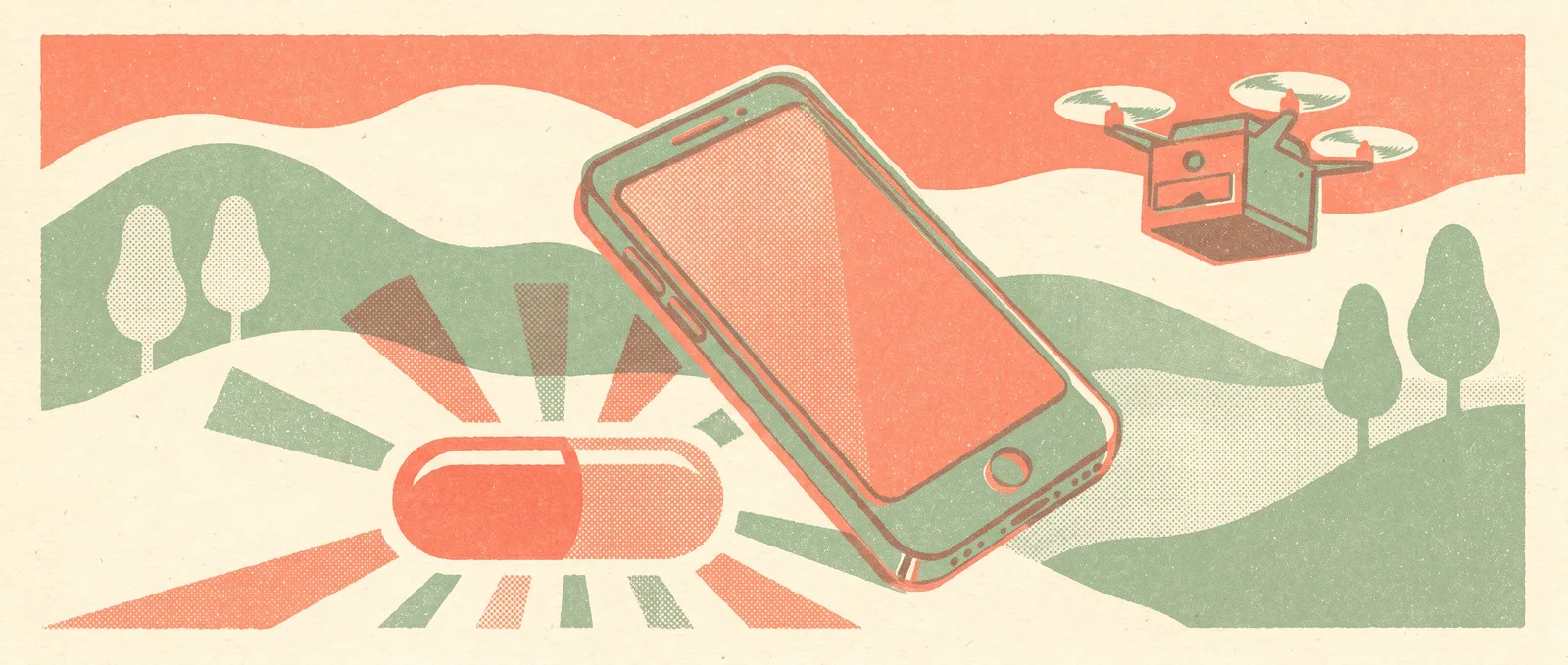
While the AI industry argues about trillion-parameter models and billion-dollar data centers, a quieter story is playing out in places with no broadband at all. IEEE Spectrum reports on the rise of “small AI” — models compact enough to run on a cheap phone, a drone, or a $50 Arduino board — and the very practical work they’re doing around the world.
The lead example: RxScanner, a handheld device that checks whether medication is real. It scans a pill with infrared light and matches the molecular profile against a pharmaceutical database — critical in countries where counterfeit medicine kills thousands of people every year. The system originally sent every scan to a US data center; on a weak connection in Cape Town, one result took over five minutes. So the team shrank the model until it ran entirely on an Android phone — offline, on battery power. Pharmacies in more than a dozen countries, including Ghana, Kenya, Myanmar, and Nigeria, now use it. Other examples from the report: drones in India that spot diseased cashew plants on the spot with no server in sight, mosquito detectors that flag malaria risk, and electrocardiogram devices running on Arduino boards in parts of Brazil that lack access to standard equipment.
What’s behind it? Two curves crossing. Hardware keeps getting more capable — by the end of this year, roughly 45 percent of smartphones shipped will be able to run generative AI locally. And models keep getting smaller through techniques like pruning (removing the parts of a big model a task doesn’t need) and distillation (training a small model to mimic a big one). Open-weight models like Google’s Gemma 4 and Alibaba’s Qwen 3.5 make it easy to retrain a small model on one specific problem. A fair caveat from the article itself: small models are less capable in general — they’re specialists, not all-rounders — and big models are still needed to create them in the first place.
What this means for you: Even if your internet is fine, the same technology is what makes private, local AI possible on your own laptop or phone — no cloud, no subscription, your data stays home. And it’s a healthy reframe: the World Bank notes only 0.7 percent of internet users in the poorest countries have ever used ChatGPT. For most of the world, the AI that matters isn’t the biggest one — it’s the one that works where they live.
Sources
Source: https://spectrum.ieee.org/small-language-models-ai-pharmaceuticals
Anthropic Can Now Read Claude's Inner Monologue — Meet the Jacobian Lens
Anthropic's new J-Lens method reveals a hidden 'working memory' inside Claude where the model holds concepts it never says out loud — and changing it changes Claude's answers.