"AI-Generated" or "AI-Assisted": Music Gets Its First Official AI Labels
A coalition led by RIAA and IFPI — including Germany's BVMI — has introduced two voluntary labels for AI music and wants Spotify and Apple Music to display them.
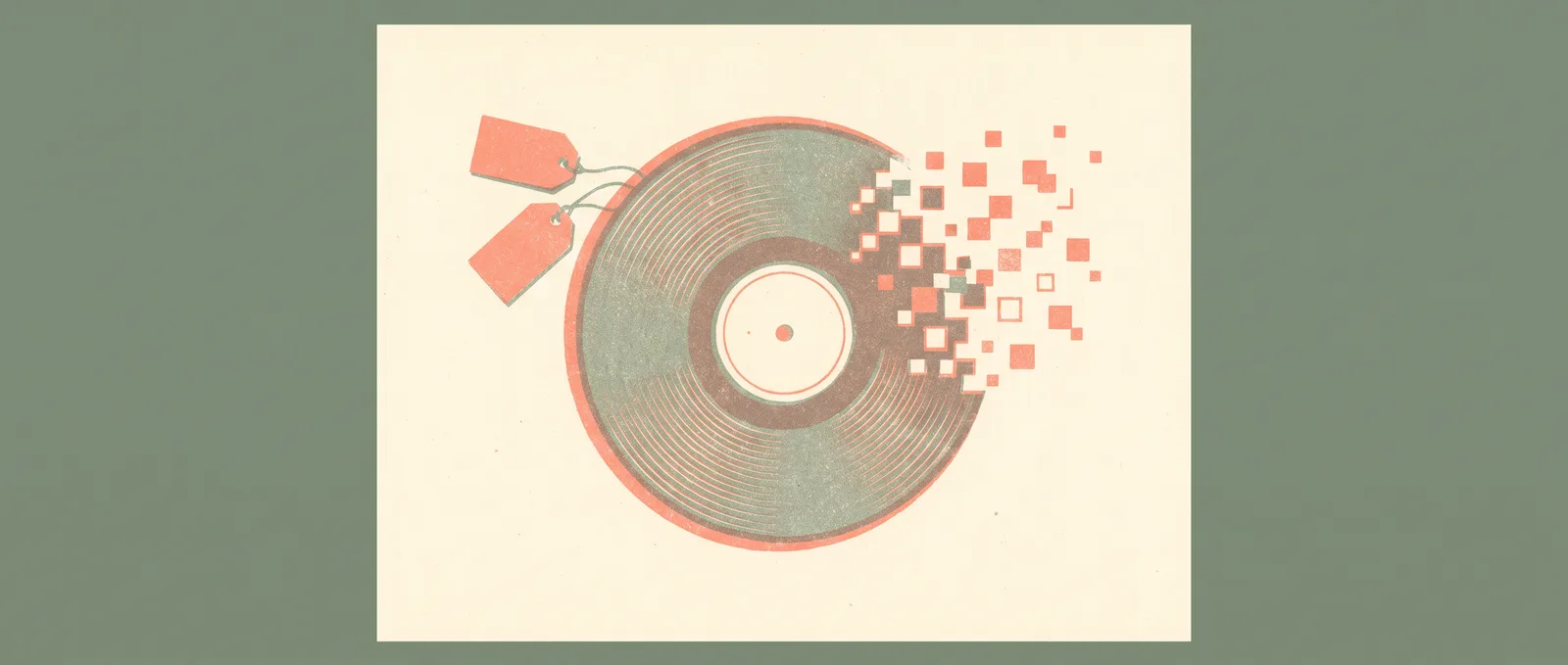
The music industry has agreed on something rare: a common answer to AI. A coalition of major industry bodies has introduced a two-tier labeling system for music made with artificial intelligence — and is now pushing streaming services like Spotify and Apple Music to display the labels to listeners.
The system is simple by design. “AI-Generated” applies to a track built entirely by AI from a text prompt, or where a machine produced the lead vocal or the main instrumental. “AI-Assisted” flags a track that is mostly human work but leans on AI in places — cleanup, mixing help, a generated backing element. Behind the plan stand the RIAA (the US record industry association) and IFPI (its international counterpart), joined by the Recording Academy — the people behind the Grammys — actors’ and performers’ union SAG-AFTRA, the independent-label association A2IM, and Germany’s music industry association BVMI.
The labels are voluntary, and that’s the catch. Streaming platforms haven’t committed to showing them. DiMA, the trade group representing Spotify, Apple Music, and Amazon, said only that it’s following the announcement closely. Today’s reality is a patchwork: Spotify and Apple Music rely on artists honestly declaring AI use themselves, while Tidal tags suspected AI tracks on its own and withholds royalties from fully generated music.
What’s behind this? Fear of drowning, mostly. AI music tools can now produce passable tracks in seconds, and streaming services are filling up with them — competing for the same royalty pool as human musicians. The industry’s calculation: if listeners can see what’s fully machine-made, human work keeps its value, and the “AI-Assisted” middle tier lets real artists use AI tools without being lumped in with prompt-to-playlist content farms. It’s the same playbook as nutrition labels — don’t ban anything, just make it visible and let people choose. Whether it works depends entirely on whether platforms adopt it and whether self-declared labels are honest; a voluntary system has no teeth against exactly the flood it’s aimed at.
What this means for you: If you’re a listener, you may soon see small AI tags next to tracks — a useful signal, worth knowing it depends on honest self-reporting. If you make music and use AI tools for polish or production help, this framework is actually good news: it draws an official line between “used AI as a tool” and “generated by AI,” which protects you from blanket suspicion. And if you follow the AI debate more broadly, watch this one — music is testing the transparency approach that other industries, from books to journalism, will likely copy or avoid based on how it goes.
Sources
Orca: A New Kind of AI That Learns How the World Works by Watching
Beijing's BAAI released Orca, a 'world model' trained on 125,000 hours of video that matches specialized robotics systems — without ever seeing a labeled robot action during pre-training.