An AI Just Proved a Math Problem That Stumped Humans for 50 Years
OpenAI's GPT-5.6 Sol Ultra reportedly proved the Cycle Double Cover Conjecture in under an hour. A mathematician calls the proof 'very nice' — and points out what the announcement leaves out.
OpenAI says its new top model, GPT-5.6 Sol Ultra, has produced a complete proof of the Cycle Double Cover Conjecture — a graph theory problem that mathematicians have been chewing on since the 1970s. The model reportedly needed less than an hour, using 64 subagents (separate AI workers tackling the problem in parallel).
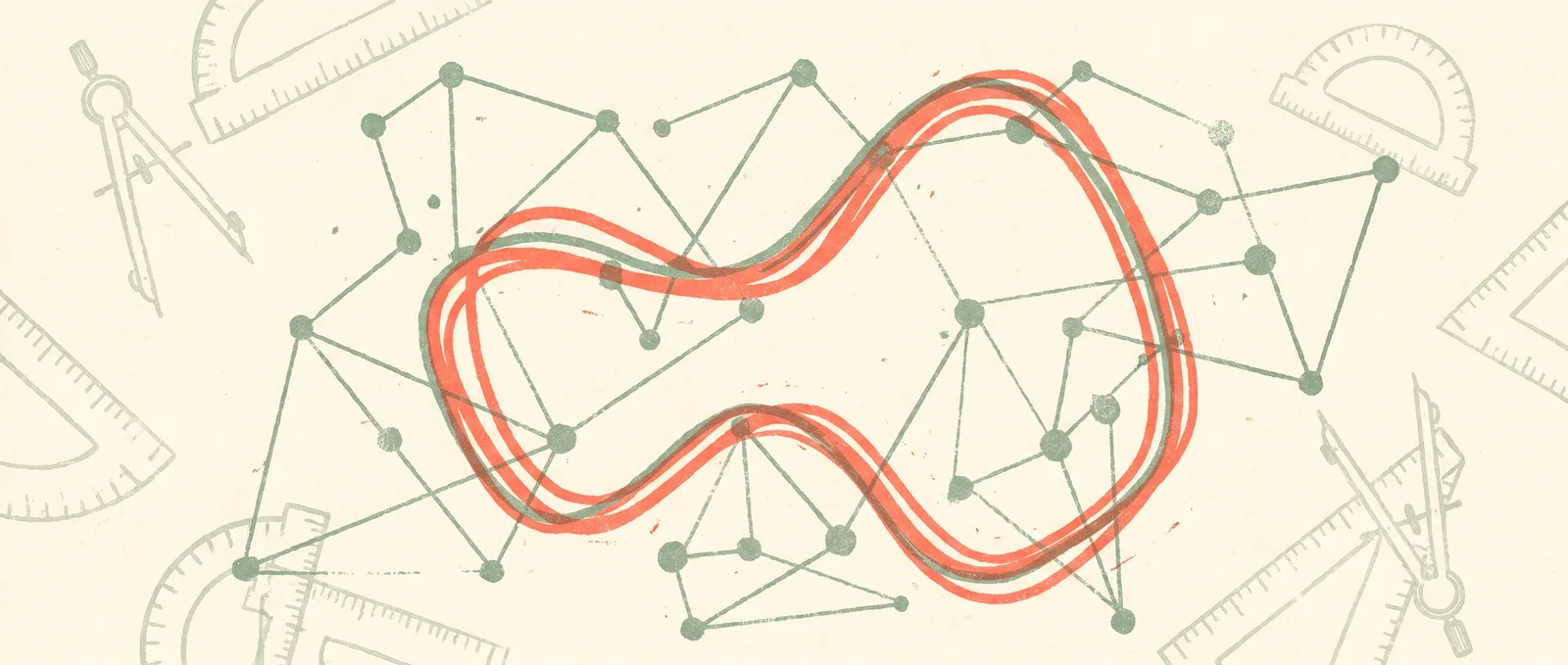
The conjecture itself is surprisingly easy to state. Picture a network of points connected by lines — a road map, say. The question: can you always find a set of round trips so that every road gets traveled exactly twice? For fifty years, nobody could prove the answer is always yes. Partial answers existed for special cases; a general proof didn’t.
Thomas Bloom, a mathematician at the University of Manchester, has given the most detailed public assessment so far. He calls it “a very nice proof” — and adds a twist: the solution is short, elementary, and “could have been discovered in the 1980s.” No new mathematical machinery required, just a clever combination of known tools. His theory on why humans missed it: the key step involves a counterintuitive move that a human would likely try, watch fail, and abandon. The AI doesn’t get discouraged — it keeps grinding through small variations until one clicks.
There’s a catch worth knowing before you get too excited. Bloom points out that the core ideas trace back to a 1983 paper — which OpenAI’s write-up doesn’t cite at all. That’s a recurring problem with AI-generated papers: they lean on the existing literature without saying so, making the machine look more original than it is. And a full check by the mathematical community is still pending, which is why “reportedly” is doing real work in this story.
What’s behind this? Partly, clever prompting. The instructions given to the model essentially engineered stubbornness: assume a proof exists, don’t search the internet, don’t answer “this is unsolved,” and don’t respond until a complete proof survives adversarial checking by other agents. The model was told to compute for at least eight hours before even considering giving up. It finished in one. Bloom expects more old conjectures to fall this way — the ones that only needed existing theory plus enormous patience. The catch: that’s likely a small share of open problems, and nobody knows in advance which ones.
What this means for you: Nothing changes in your daily life just yet — but this is one of the clearest signs of where AI research tools are heading: tireless, parallel, and genuinely useful on hard problems. If you work with AI on anything difficult, there’s also a practical lesson hidden in that prompt: persistence can be designed. Telling a model to keep trying, verify itself, and not settle for partial answers measurably changes what it delivers.
Sources
Independent Numbers Are In: Meta's Muse Spark 1.1 Is a Serious Value Pick
Benchmark firm Artificial Analysis puts Meta's Muse Spark 1.1 ahead of GLM 5.2 in coding at a lower price — and its hallucination rate dropped by nearly half.